EN
EN



Ingredients
- What is a Diaphragm Battery? How does it work?
- Electrical Stimulation of Respiration: The Mechanism of the Diaphragm Battery
- Differences Between Diaphragm Battery and Mechanical Ventilation
- Who is Diaphragm Pacemaker Applied to? (Indications)
- High-Level Spinal Cord Injuries and Paralysis
- Respiratory Support in ALS (Amyotrophic Lateral Sclerosis) Patients
- Central Alveolar Hypoventilation Syndrome (Ondine’s Curse)
- Types of Diaphragm Batteries and Application Methods
- Phrenic Nerve Stimulation (Neck Area Application)
- Direct Diaphragm Muscle Stimulation (Laparoscopic Method)
- Diaphragm Pacemaker Surgery and Placement Process
- Minimally Invasive Surgery: Laparoscopic Implantation Techniques
- Preoperative Phrenic Nerve Conduction Tests
- Advantages of Diaphragm Battery Application
- Freedom from Mechanical Ventilation and Natural Breathing
- Increase in Quality of Life and Improvement of Speaking Skills
- Reduced Risk of Infection (Pneumonia)
- Frequently Asked Questions
- Can a diaphragm pacemaker be implanted in every paralyzed patient?
- Will the patient with the pacemaker completely get rid of the respirator?
- How long does a diaphragm battery last, and how to maintain it?
- Scientific Bibliography
The diaphragm pacemaker is an advanced medical system that enables the diaphragm, which is our breathing muscle, to be operated with electrical impulses and aims to save the patient from the ventilator.
Under normal conditions, the breathing signal from the brain reaches the diaphragm through the phrenic nerve and contraction occurs; However, when this transmission line is damaged, breathing stops.
The application of a diaphragm battery replaces this natural conduction line, sending regular signals to the diaphragm muscle from the outside and creating an artificial but natural breathing cycle.
It offers a vital solution for patients living dependent on ventilators, especially due to neck fractures, spinal cord injuries or neurological diseases such as ALS.
This technology not only improves the patient’s physical health but also maximizes their quality of life by restoring their ability to speak.
What is a Diaphragm Battery? How does it work?
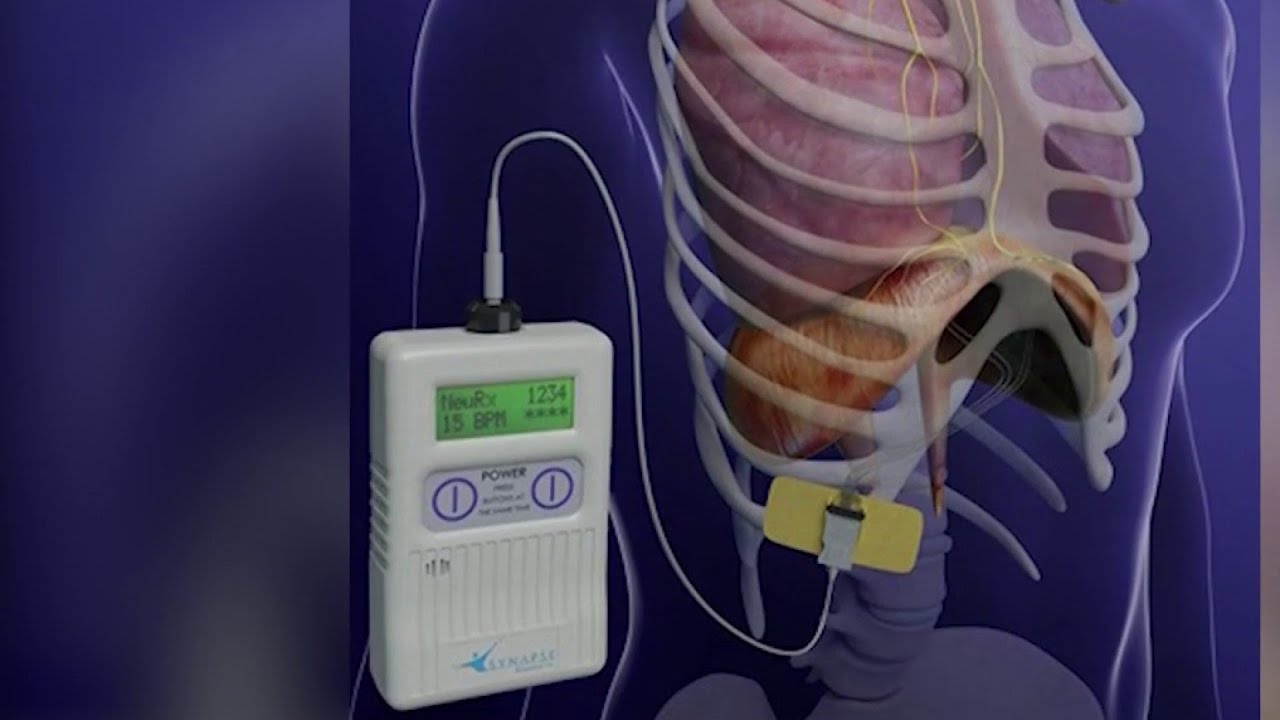
Diaphragm battery system; It consists of electrodes placed inside the body, a signal receiver and a control unit that manages this system from outside the body.
The system delivers low-voltage electrical currents to the diaphragm muscle or the phrenic nerve that stimulates this muscle, causing the muscle to contract in a rhythmic manner.
When the contraction occurs, the rib cage expands, air fills the lungs, thus mimicking the natural breathing mechanism.
Electrical Stimulation of Respiration: The Mechanism of the Diaphragm Battery
The mechanism works on the principle of directly stimulating the target muscle by “bypassing” a disconnect in the nervous system.
Through the control unit, the frequency of breathing (frequency) and the depth of the breath (current intensity) can be adjusted millimetrically according to the needs of each patient.
In this way, the patient gets rid of the noisy and restrictive hoses of the ventilator and has a freer movement.
Differences Between Diaphragm Battery and Mechanical Ventilation
Mechanical ventilation (breathing apparatus) introduces air into the lungs by “pushing” it with positive pressure; This can damage lung tissue in the long term.
The diaphragm battery provides natural breathing with negative pressure; that is, it “pulls” air into the lungs, which is the physiologically healthiest form of breathing.
The risk of infection is lower in battery breathing because the need for a tracheostomy tube, which opens the airways to the outside world, decreases or disappears altogether over time.
Who is Diaphragm Pacemaker Applied to? (Indications)
This app is designed for special groups of patients in whom the diaphragm muscle itself is healthy but no neural impulse is coming.
High-Level Spinal Cord Injuries and Paralysis
In injuries above the cervical spine (C3-C5 level), the respiratory signal from the brain cannot be transmitted downwards and the patient immediately experiences respiratory paralysis.
If the phrenic nerves and diaphragm muscles of these patients remain intact, they can avoid being connected to a ventilator for life thanks to the diaphragm pacemaker.
Respiratory Support in ALS (Amyotrophic Lateral Sclerosis) Patients
ALS is a disease that is characterized by the loss of motor neurons and affects the respiratory muscles over time.
Diaphragm pacemakers inserted at an early stage can slow down muscle wasting (atrophy), prolong the patient’s breathing time on their own and contribute to life expectancy.
Central Alveolar Hypoventilation Syndrome (Ondine’s Curse)
In this rare case, the brain forgets to give the order to breathe, especially during sleep.
The diaphragm pacemaker allows these patients to breathe safely during their night’s sleep, eliminating the risk of respiratory arrest during sleep.
Types of Diaphragm Batteries and Application Methods
With the development of technology, the technique of placing the battery has evolved into less invasive (closed) methods.
Phrenic Nerve Stimulation (Neck Area Application)
In the classical method, electrodes are placed on the phrenic nerve in the neck or rib cage.
Although direct stimulation of the nerve provides very effective breathing, it requires very meticulous surgery due to the risk of damaging the nerve.
Direct Diaphragm Muscle Stimulation (Laparoscopic Method)
It is the most preferred method today; The electrodes are inserted through the abdominal cavity and sewn directly to the points where the diaphragm muscle meets the nerve (motor points).
Since it is performed laparoscopically (closed), the patient’s recovery process is very fast and the risk of infection is very low.
Diaphragm Pacemaker Surgery and Placement Process
Before the decision for surgery is made, a series of neurological and radiological tests are performed to determine whether the patient is suitable for this system.
Minimally Invasive Surgery: Laparoscopic Implantation Techniques
The operation is performed under general anesthesia through 3-4 small holes opened in the abdomen.
With a special mapping device, the strongest contraction points on the diaphragm are found and the electrodes are fixed to these areas.
Preoperative Phrenic Nerve Conduction Tests
For the battery to work, the phrenic nerve must be “excitable”.
With nerve conduction tests (EMG), it is measured whether the nerve responds electrically; If the nerve is completely dead, battery application cannot be successful.
Advantages of Diaphragm Battery Application
This system is not just a device, but a bridge that allows the patient to reconnect to the world.
Freedom from Mechanical Ventilation and Natural Breathing
Patients on ventilators are exposed to constant noise and limited movement, while patients on batteries breathe quietly and naturally.
Thanks to the portable control units, patients with batteries can travel much more comfortably with their wheelchairs and blend in with the outside world.
Increase in Quality of Life and Improvement of Speaking Skills
Since the respirator constantly blows air, it is intermittent and difficult for patients to speak.
Since the diaphragm pacemaker provides a natural airflow, patients can form much longer sentences and speak in a normal tone of voice.
Reduced Risk of Infection (Pneumonia)
The biggest danger of mechanical ventilation is the risk of “ventilator-associated pneumonia” (pneumonia).
Since all parts of the lungs are ventilated with the diaphragm pacemaker and the natural cough reflex is supported, the risk of lung infection is significantly reduced.
Ventilator and Diaphragm Battery Comparison Table
| Feature | Mechanical Ventilation (Device) | Diaphragm Battery (Pacing) |
| Breathing Type | Positive Pressure (Strain) | Negative Pressure (Natural) |
| Conversation | Hard and Cut | Fluid and Natural |
| Mobility | Restricted (Connected to hoses) | High (Portable unit) |
| Risk of Infection | High | Low |
| Nutrition/Smell | Restricted | Better Sensation |
Prof. Dr. Levent Alpay: Diaphragm pacemaker does not only allow a paralyzed patient to breathe; gives him back his “freedom”. It is an indescribable feeling for a patient to be able to get rid of the noise of the respirator and breathe silently with his own lungs. However, it should not be forgotten that; This is not a miracle, but a success achieved through the right patient selection and meticulous surgery. Our patients with alive phrenic nerves always have the chance to get rid of bed addiction and return to social life thanks to this technology.
Case Experience (Anonymous): Our patient, who was 22 years old and lived on a ventilator for 2 years due to a neck fracture after a traffic accident, applied to our clinic. In the tests, it was determined that the phrenic nerves were intact and a diaphragm pacemaker was placed by laparoscopic method. After 3 months of “diaphragm muscle strengthening” training after the surgery, our patient was completely weaned from the ventilator 24 hours a day, started breathing on his own and returned to his university education.
If you or a relative of yours is dependent on a ventilator, you can make an appointment with our clinic and seek expert opinion to get information about suitability assessment and modern treatment options for diaphragm pacemaker application.
Frequently Asked Questions
Can a diaphragm pacemaker be implanted in every paralyzed patient?
No, for the battery to work, the structure of the diaphragm muscle must be intact and the phrenic nerve, which stimulates the muscle, must maintain its electrical vitality.
Will the patient with the pacemaker completely get rid of the respirator?
While full independence can be achieved for 24 hours in many patients (for example, in advanced stages of ALS), in some cases (for example, in advanced stages of ALS), it is aimed to wean from the device only during the day and improve the quality of life.
How long does a diaphragm battery last, and how to maintain it?
The batteries of the control unit outside the body can be easily replaced; Electrodes inside the body are usually designed to last a lifetime and are monitored with regular technical checks.
Scientific Bibliography
- AATS (American Association for Thoracic Surgery): Diaphragm Pacing Systems in Spinal Cord Injury
- PubMed (NCBI): Laparoscopic Diaphragm Pacing in ALS Patients
- Journal of Spinal Cord Medicine: Long-term Outcomes of Phrenic Nerve Stimulation
- Turkish Thoracic Society: Diaphragmatic Battery Applications Guide