 EN
EN




Ingredients
- What is Esophageal Cancer? How Does It Develop?
- Anatomical Structure of the Esophagus and Location of the Cancer
- Adenocarcinoma vs. Squamous Cell Carcinoma Difference
- What are the Symptoms of Esophageal Cancer?
- Difficulty Swallowing (Dysphagia) and Weight Loss
- Chest Pain, Hoarseness, and Persistent Cough
- Esophageal Cancer Causes and Risk Factors
- The Impact of Smoking, Alcohol, and Dietary Habits
- The Relationship Between Barrett’s Esophagus and Chronic Reflux
- Esophageal Cancer Diagnosis and Diagnostic Methods
- Endoscopy (Gastroscopy) and Biopsy Procedure
- PET-CT and Endosonography (EUS) for Staging
- Esophageal Cancer Treatment Methods
- Surgical Treatment: Esophagectomy (removal of the esophagus)
- Minimally Invasive Surgery: Closed and Robotic Surgeries
- Multidisciplinary Approach: Chemotherapy and Radiotherapy Processes
- Postoperative Recovery Process and Nutrition Guide
- Frequently Asked Questions
- Can Esophageal Cancer Be Detected Early?
- How Does Life Change After Esophageal Surgery?
- What are the Advantages of Closed Surgery (VATS/Robotics)?
- Scientific Bibliography
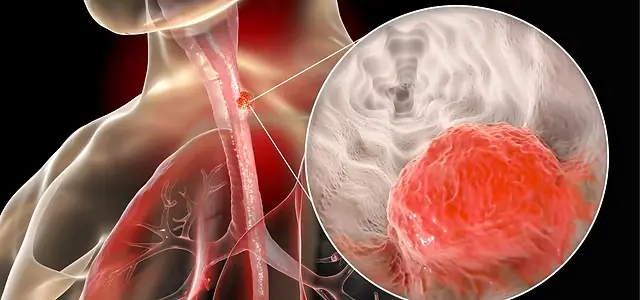
Esophageal cancer is a serious oncological disease characterized by the uncontrolled proliferation of cells lining the inner surface of the esophagus in the muscular tube structure that carries food from the mouth to the stomach.
This type of cancer usually starts in the inner layer of the esophagus and tends to spread to the outer layers, lymph nodes and surrounding organs over time.
Esophageal cancer, which has an important place among digestive system cancers worldwide, has now become a more manageable health problem thanks to developments in modern medicine and advances in surgical techniques.
In this disease, which has a very high treatment success when diagnosed early, it is vital to take a multidisciplinary approach and create patient-oriented treatment plans.
What is Esophageal Cancer? How Does It Develop?
Esophageal cancer occurs when mutations in cell DNA disrupt the normal life cycle of cells.
Normal cells do not die when they should and multiply rapidly to form masses of tissue called tumors.
Due to the flexible structure of the esophagus, the tumor does not cause any obvious complaints at first, which can lead to insidious progression of the disease.
Anatomical Structure of the Esophagus and Location of the Cancer
The esophagus is approximately 25-30 cm long and passes through three main anatomical regions: the neck, rib cage, and abdomen.
In which of these regions the cancer is located is the most critical factor in determining the surgical technique and treatment strategy to be applied.
For example, radiotherapy comes to the fore in tumors in the neck region, while surgery is the main treatment method for tumors in the junction of the chest and abdomen.
Adenocarcinoma vs. Squamous Cell Carcinoma Difference
Esophageal cancers are divided into two main groups according to the type of cell they originate from.
- Squamous Cell Carcinoma: It develops from the flat cells that line the inside of the esophagus; It usually occurs in the upper and middle parts and is closely related to smoking/alcohol use.
- Adenocarcinoma: It develops from glandular cells that secrete mucus; It is usually seen in the lower parts of the esophagus where it meets the stomach and is associated with chronic reflux/Barrett’s esophagus.
Today, there is a significant increase in Adenocarcinoma cases due to the increase in obesity and reflux in western societies and in our country.
What are the Symptoms of Esophageal Cancer?
Symptoms usually appear when the tumor noticeably narrows the diameter of the esophagus or presses on surrounding tissues.
Difficulty Swallowing (Dysphagia) and Weight Loss
The most typical and first symptom of esophageal cancer is the sensation of food getting stuck while swallowing.
Initially, there is difficulty in only solid foods (such as meat, bread), but as the disease progresses, it may become difficult to swallow even liquid foods.
Reduced food intake due to difficulty swallowing and cancer altering the body’s metabolism leads to involuntary and severe weight loss in the patient in a short time.
Chest Pain, Hoarseness, and Persistent Cough
With the growth of the tumor, chest pain may develop in the form of a burning or pressure sensation behind the sternum.
If the cancer affects the nerves leading to the vocal cords, hoarseness; If it presses on the trachea or forms a fistula (canal), persistent coughing fits may occur.
When these symptoms are seen, a thoracic surgeon or gastroenterologist should be consulted immediately.
Esophageal Cancer Causes and Risk Factors
Although the exact cause of cancer is unknown, conditions that cause chronic irritation in esophageal cells increase the risk rate.
The Impact of Smoking, Alcohol, and Dietary Habits
Tobacco products and excessive alcohol consumption increase the risk of squamous cell cancer exponentially.
In addition, constant consumption of very hot drinks (tea, coffee, etc.) can cause thermal damage to the esophageal mucosa, triggering the cancerous process.
A diet low in fruits and vegetables and high in processed foods is also a significant risk factor.
The Relationship Between Barrett’s Esophagus and Chronic Reflux
The constant leakage of stomach acid into the esophagus (reflux) causes the cells in the lower part of the esophagus to change (metaplasia) over time.
This condition, called Barrett’s Esophagus, has the potential to turn into adenocarcinoma type cancer if left untreated.
Therefore, it is vital that patients with long-term reflux complaints are under regular endoscopic follow-up.
Esophageal Cancer Diagnosis and Diagnostic Methods
Modern diagnostic methods allow us to precisely determine not only the presence of the tumor, but also its cell type and degree of spread (staging).
Endoscopy (Gastroscopy) and Biopsy Procedure
The gold standard in diagnosis is endoscopy, in which the esophagus is examined with a thin tube with a camera at the end.
Small tissue samples (biopsy) taken from suspicious areas during the examination are examined in the pathology laboratory and a definitive diagnosis is made.
PET-CT and Endosonography (EUS) for Staging
Once diagnosed, PET-CT (Positron Emission Tomography) is used to understand the spread of the disease in the body.
EUS (Endoscopic Ultrasonography) is the most sensitive method that shows how deep the tumor has gone into the esophageal wall and whether it has affected the surrounding lymph nodes.
Esophageal Cancer Treatment Methods
Treatment plan; It is designed individually according to the patient’s age, general health status and the stage of the tumor.
Surgical Treatment: Esophagectomy (removal of the esophagus)
Surgery is the most effective method that provides permanent cure (cure) in esophageal cancer.
In esophagectomy surgery, the cancerous area is removed along with a large margin of healthy tissue and surrounding lymph nodes; Then a new esophagus is created from the stomach or intestine.
Minimally Invasive Surgery: Closed and Robotic Surgeries
Today, these major surgeries can now be performed with closed methods without making large incisions in the chest and abdomen.
Thoracoscopic (VATS) and Robotic surgery techniques allow the patient to feel less pain and recover much faster.
In these methods, blood loss is minimal and patients are ready for additional treatments (chemotherapy) more quickly because the immune system is better protected.
Multidisciplinary Approach: Chemotherapy and Radiotherapy Processes
In locally advanced stage cases, “Neoadjuvant” chemotherapy and radiotherapy are applied to shrink the tumor and increase the chance of success before surgery.
These treatment decisions; It should be taken jointly by the council (tumor board), which includes the thoracic surgeon, oncologist and radiologist.
Treatment Options Comparison Table
| Feature | Open Surgery | Minimally Invasive (Closed/Robotic) |
| Incision Size | 20-25 cm (Wide incision) | 1-2 cm (Small holes) |
| Pain Level | High | Significantly less |
| Hospital Stay | 10-14 Days | 5-7 Days |
| Recovery Time | 4-8 Weeks | 2-3 Weeks |
| Risk of Complications | Medium | Low |
Prof. Dr. Levent Alpay: Diagnosing esophageal cancer is a difficult process for patients and their relatives, but it should not be forgotten that medicine is at a very advanced point in this regard. Especially thanks to robotic and closed surgical techniques, we can now perform these surgeries, which were previously considered very risky, with high success and low complication rates. My most important advice; You should get the opinion of a specialist thoracic surgeon without wasting time, without attributing complaints such as difficulty in swallowing to “old age” or “stress”. Early intervention saves lives.
Case Experience (Anonymous):
Our 54-year-old male patient applied with the complaint of difficulty swallowing solid foods and loss of 8 kilos for the last 3 months. Examinations revealed a 3 cm tumor in the middle of the esophagus. After short-term radiotherapy and chemotherapy applied before surgery, our patient underwent robotic esophagectomy. With the advantage of rapid recovery provided by closed surgery, our patient started oral feeding on the 6th day and was discharged in good health on the 8th day
You can make an appointment with our clinic to get a second expert opinion about your esophageal cancer complaints or diagnosis and to evaluate closed surgery options.
Postoperative Recovery Process and Nutrition Guide
The first weeks after surgery are the period for the body to get used to the new digestive system.
Patients are initially fed with liquid and soft foods; Over time, they acquire the habit of eating little and often.
Since the newly created esophagus (usually the stomach) is less voluminous, the nutrition plan is arranged with a focus on protein under the supervision of a dietitian.
Frequently Asked Questions
Can Esophageal Cancer Be Detected Early?
Yes, cancer can be caught at its initial stage with regular endoscopic check-ups, especially in at-risk groups with Barrett’s esophagus or chronic reflux.
How Does Life Change After Esophageal Surgery?
After surgery, patients can swallow and eat normally; However, they need to adapt to some lifestyle changes, such as reducing portions and not lying down immediately after eating.
What are the Advantages of Closed Surgery (VATS/Robotics)?
Since the intercostal space is not opened widely in closed surgeries, respiratory functions are better preserved, the risk of infection is reduced and the patient returns to his social life much earlier.
Scientific Bibliography
- New England Journal of Medicine (2012): Preoperative chemoradiotherapy for esophageal or junctional cancer – van Hagen P et al.
- PubMed (NCBI): Robotic-assisted Minimally Invasive Esophagectomy Outcomes
- Annals of Surgery (2017): Long-term Health-related Quality of Life Following Esophagectomy: A Nonrandomized Comparison of Thoracoscopically Assisted and Open Surgery – Barbour AP et al.
- NCCN (National Comprehensive Cancer Network): Esophageal Cancer Clinical Guidelines